




















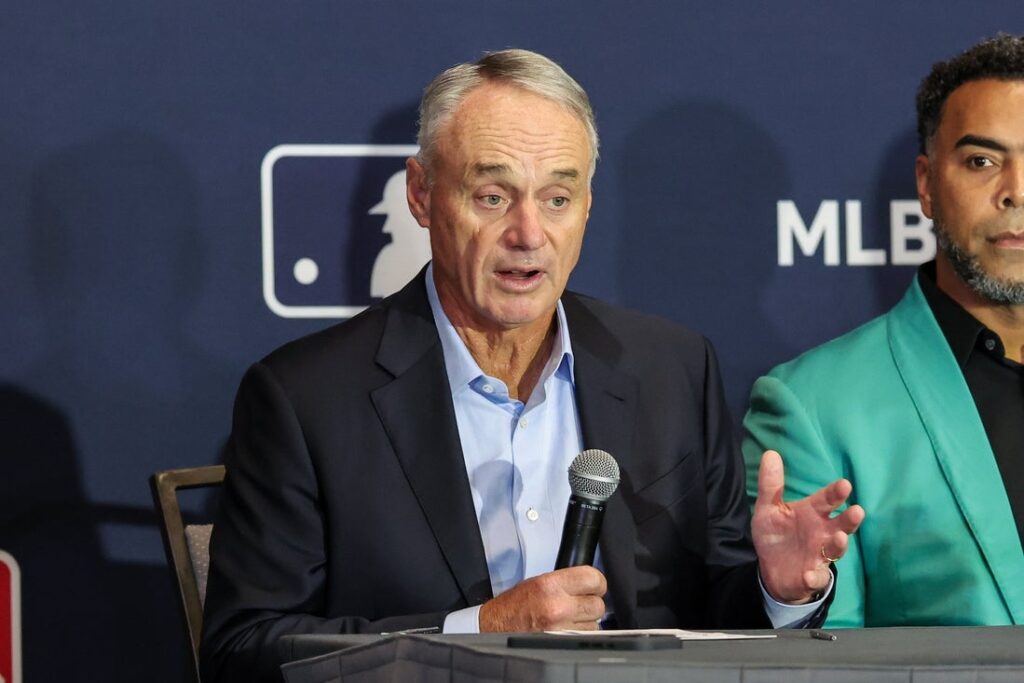
Because he served as a lawyer on the owners’ bargaining team in 1994, current MLB commissioner Rob Manfred is all too familiar with the 1994-95 players strike that severely damaged the game, and he said on Wednesday he is concerned about a repeat this offseason.
That 1994-95 strike led to the cancellation of 948 regular-season games and the entire 1994 postseason, including the World Series for the first time in 90 years. Fan attendance and television ratings dropped dramatically, along with the game’s reputation.
“Of course I do (worry about a repeat),” Manfred said Wednesday during the owners meetings in New York. “We want to make an agreement. We made a proposal on one set of topics. At the outset of negotiations, I went and said to myself, ‘We’re open to whatever ideas people have, but we need a realistic framework that addresses the fans’ concerns about competitive balance.’ You just can’t ignore that financial penalties have not gotten it done for us.”
Before last week, 1994 was the last time owners formally proposed a salary cap. This time, the owners are seeking a firm salary cap of $245.3 million with a hard floor of $171.2 million.
The union remains steadfast against any limit on payroll, instead proposing a “competitive-integrity tax” for teams near the bottom in spending that resembles the competitive balance tax for high-spending teams, among several other changes.
If the two sides cannot agree on a new collective bargaining agreement by Dec. 1, owners are expected to lock out the players until they work out a deal. The last lockout came in December 2021, but an agreement was reached in March 2022, before the season began. This time around, the owners want MLB’s economic system to get a complete makeover.
“We have tried mightily over several rounds of bargaining to use a competitive balance tax to address competitive concerns,” Manfred said, “and sometimes you’ve got to admit you failed.”
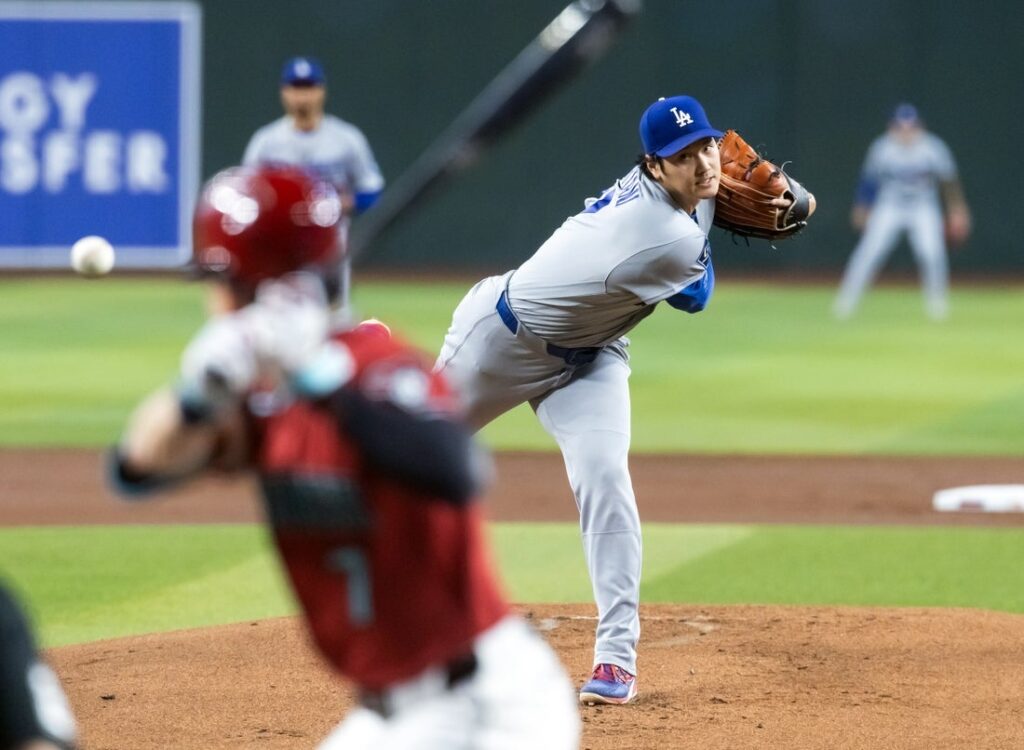
The Los Angeles Dodgers are cited as the prime reason for a salary cap. The two-time defending World Series champions had a $346 million player payroll last season and paid another $169 million in luxury-tax penalties. The Dodgers’ tax bill exceeded the Miami Marlins’ entire payroll by $100 million.
The Dodgers, New York Yankees, New York Mets and other high-revenue teams, due to their lucrative local TV deals, hold a significant advantage over lower-revenue teams, the owners believe, and MLB feels a salary cap would lessen that edge.
For example, the Dodgers will receive an average of $334 million per year through 2039 on their 25-year, $8.35 billion local TV contract. MLB teams currently pool 48% of all local revenue, but in MLB’s proposal, local TV money would be shared evenly, separately from other local revenue. Manfred said he believes all 30 teams support the measure.
–Field Level Media